
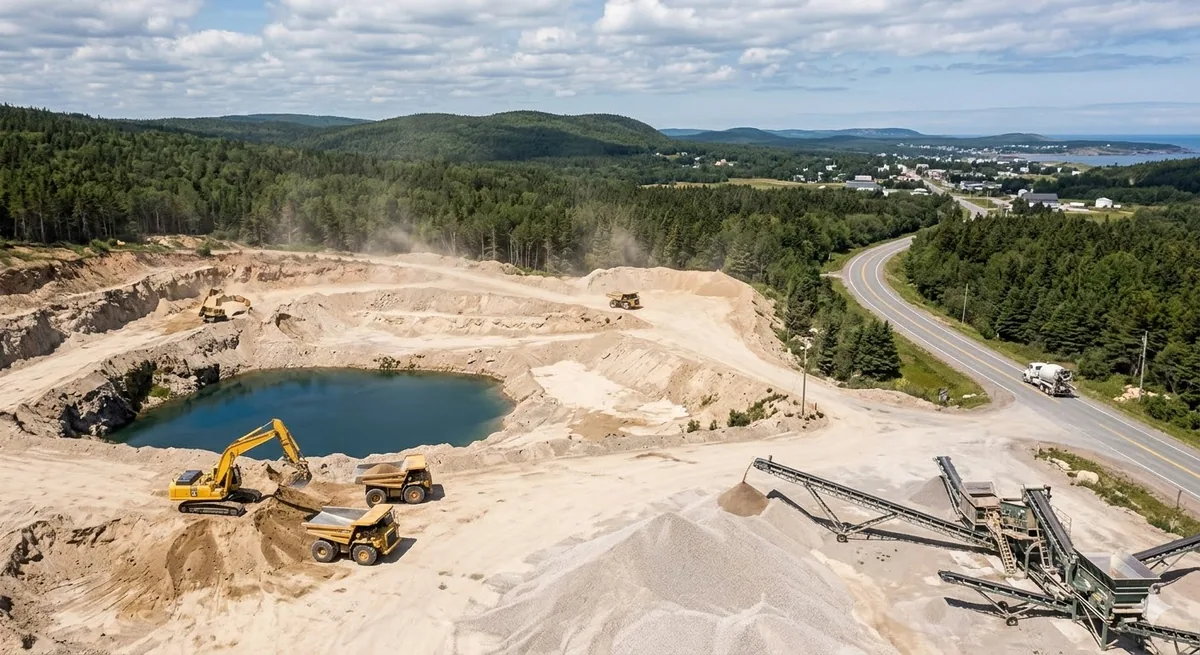
When you drive on a newly paved road or pour a concrete foundation, you are relying on aggregate. Aggregate is simply sand, gravel, and crushed stone, which is the essential, non-reactive framework materials needed for modern infrastructure. In Nova Scotia, digging these materials out of the ground is big business. It is the province's largest mining sector, extracting 13 million tons annually and contributing $243.5 million to the provincial GDP in 2012 alone.
But balancing this economic necessity with environmental protection is a delicate dance. A comprehensive 2025 thesis by Leah Mymin from Acadia University analyzed a decade of environmental impact assessments (2006-2016) in Nova Scotia's aggregate sector, uncovering a mix of surprising successes and a glaring regulatory loophole.
The "Under 4 Hectares" Strategy
Before a large mining project breaks ground, it usually has to undergo an impact assessment, which is a rigorous process to figure out how the project will affect the local environment and community. In Nova Scotia, this assessment is mandatory for pits and quarries over 4 hectares.
Here is where the data gets interesting: of the 30 impact assessments conducted for the aggregate sector during the study period, 29 of them (97%) were for expansions of existing sites. Only a single assessment was for a brand-new quarry proposal.
Why the massive discrepancy? The research suggests that quarry developers might be intentionally keeping their initial project footprints under the 4-hectare threshold to bypass the rigorous impact assessment process. Once the quarry is established and operating, they simply apply for an expansion. By doing this, companies can argue that expanding an already existing quarry won't create any new environmental impacts, effectively undermining the spirit of the legislation.
Good Neighbors, Dropping Climate Standards
Despite this potential loophole, the industry isn't entirely avoiding its responsibilities. In fact, when it comes to being a good neighbor, the aggregate sector is actually overachieving. Out of 29 approved projects, 25 exceeded the minimum provincial requirements for community engagement. Following a 2008 legislative update that prioritized Indigenous reconciliation, communication with Indigenous organizations and local communities saw a marked improvement.
However, the industry's approach to climate change tells a different story. While 16 out of 29 projects acknowledged they produce greenhouse gas emissions, only 12 outlined specific mitigation techniques, like reducing equipment idling. Shockingly, the research found that commitments to reducing greenhouse gas emissions have actually decreased over time.
The Hidden Threat of Acid Rock Drainage
Another major blind spot is the monitoring of Acid Rock Drainage (ARD). ARD occurs when rocks containing sulfide minerals are exposed to the air during mining; the resulting chemical reaction creates a highly acidic runoff that can devastate local waterways and ecosystems.
Despite this severe risk, the industry's monitoring practices are alarmingly weak. Out of the 29 approved projects, only 6 tested the local rock for acid-producing potential, and a mere 2 projects actually committed to regular ARD monitoring. Because environmental monitoring can be expensive, companies often do the bare minimum required by law, leaving a critical gap in crisis prevention.
The Bottom Line
Nova Scotia needs aggregate to build and maintain its infrastructure, and the economic benefits are undeniable. Yet, Mymin's research clearly illustrates that while the industry is making commendable strides in community relations, the province's environmental regulations - specifically regarding the 4-hectare threshold, climate change, and toxic runoff - may need a serious overhaul to ensure sustainable development isn't just a buzzword.