
iconResearch Shock
Artificial IntelligenceEnvironmentLife SciencesSpaceNeuroscienceEngineeringSocietyTechnologyMedicineBusiness + Innovation

Company

  • Who we are
  • Our team
  • Contact us

Community

  • Community standards
  • Author guidelines

University Partners

  • For Universities
  • For Departments
  • For Research Labs

Legal

  • Privacy policy
  • Terms of service

Follow Us

Copyright © 2025, Research Shock, Inc.

Bridging the Post-Rehab Cliff: Community HIIT Programs Show Promise in Reducing Stress and Preventing Hospital Readmissions for Cardiac Patients

Bridging the Post-Rehab Cliff: Community HIIT Programs Show Promise in Reducing Stress and Preventing Hospital Readmissions for Cardiac Patients

Research Shock•Loading...
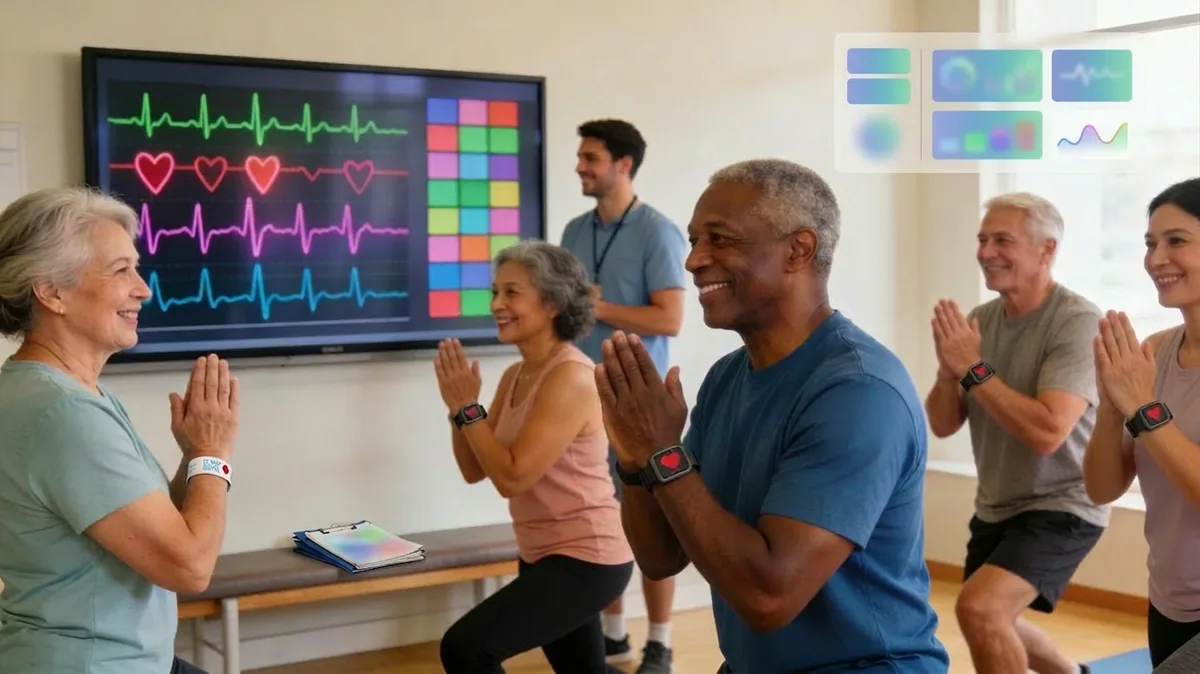
Healing hearts, one interval at a time. Credit: Perplexity

Research Summary

Following hospital based cardiac rehabilitation (CR), up to 62% of heart disease patients fail to maintain their exercise routines within a year, significantly increasing their risk of secondary cardiac events and rehospitalizations. To address this gap in care, researchers tested a 10-week community based High Intensity Interval Training (HIIT) program on recent CR graduates to measure its impact on perceived stress and physical fitness. The results showed that participants experienced a statistically significant drop in perceived stress and notable improvements in aerobic fitness. These findings highlight a critical need for structured, community based "cardiac maintenance" programs within the medical and fitness industries to improve long term disease management and reduce the economic burden of cardiovascular disease.

Bridging the Post-Rehab Cliff: Community HIIT Programs Show Promise in Reducing Stress and Preventing Hospital Readmissions for Cardiac Patients

Research Shock

Published on March 25, 2026 at 1:31 am

Summary

Following hospital based cardiac rehabilitation (CR), up to 62% of heart disease patients fail to maintain their exercise routines within a year, significantly increasing their risk of secondary cardiac events and rehospitalizations. To address this gap in care, researchers tested a 10-week community based High Intensity Interval Training (HIIT) program on recent CR graduates to measure its impact on perceived stress and physical fitness. The results showed that participants experienced a statistically significant drop in perceived stress and notable improvements in aerobic fitness. These findings highlight a critical need for structured, community based "cardiac maintenance" programs within the medical and fitness industries to improve long term disease management and reduce the economic burden of cardiovascular disease.

Cardiovascular disease (CVD) remains the leading cause of death globally. While hospital based Cardiac Rehabilitation (CR) is a highly recommended and effective intervention for patients following a heart attack or other cardiac events, a critical gap in care exists once these patients graduate from the hospital setting.

According to new research from Acadia University, as little as one year after completing a CR program, only 38% to 56% of participants continue to meet physical activity guidelines. This drop-off is alarming because nonadherence to treatment recommendations is a leading preventable cause of rehospitalization in patients with chronic heart failure.

Now, a recent study indicates that transitioning these patients into community based, supervised High Intensity Interval Training (HIIT) programs could be the key to managing psychological stress and maintaining physical fitness - two major factors in preventing secondary cardiac events.

The Hidden Risk Factor: Stress

While conventional risk factors like high blood pressure and cholesterol are heavily monitored, psychological stress is a major contributor to CVD that is often underestimated. Stress increases the prevalence and severity of cardiac events, and the overlap of stress symptoms, like chest tightness, palpitations, and shortness of breath, with actual cardiac symptoms makes it difficult for physicians and patients to assign a related role to mental health.

The transition from a highly monitored hospital program to exercising independently can be a time of concern for patients. Without proper support, many are unable to maintain the progress made in CR, discontinue exercise, and lose the protective cardiovascular benefits they gained.

The Intervention: Community Based HIIT

To test a potential solution, researchers implemented a 10-week "cardiac maintenance" program using HIIT.

What is HIIT? High Intensity Interval Training is an aerobic exercise method that involves short, intense bursts of exercise followed by rest or lower intensity recovery periods. In this study, participants followed a protocol of four 4-minute intervals of high effort, separated by 3-minute intervals of active recovery.

The program was hosted at community facilities, including Acadia University and a local YMCA, and paired participants with trained kinesiology students under the supervision of a Certified Exercise Physiologist.

Significant Reductions in Stress and Boosts in Fitness

The results of the 21-participant study were highly encouraging:

  • Lower Stress: Participants saw a statistically significant decrease in their Perceived Stress Scale (PSS) scores, dropping from an average of 13.76 down to 10.54. Five participants experienced a clinical reduction, moving from a categorized stress score of severe to moderate.

  • Better Physical Capacity: Aerobic fitness, measured by the standard 6-Minute Walk Test, improved significantly. Participants increased their walking distance from an average of 490 meters to 543 meters. Because slower walking speeds are strong predictors of increased mortality, improvement in walking distance provides an independent predictor of prognosis after a heart attack.

  • Mental Health Gains: Nearly one in five participants (19%) experienced a clinically meaningful reduction in anxiety and depression levels.

Interestingly, the study found that the patients' "self-efficacy" (their innate confidence in their ability to exercise independently) did not significantly change from pre to post program. This underscores the ongoing need for structured, supervised environments rather than simply expecting patients to work out alone.

Economic and Industrial Implications

From a medical economics standpoint, these findings highlight a massive opportunity for the private fitness sector and community health organizations.

Currently, cardiac maintenance programs are challenging to find due to limited availability and a lack of insurance coverage for post rehab maintenance. However, because continued exercise reduces the risk of rehospitalization, integrating these semi supervised programs into commercial gyms or YMCAs could vastly reduce the economic burden on the healthcare system.

By partnering certified exercise physiologists with local fitness centers, the medical and fitness industries can create a scalable, subscription based "step-down" model for cardiac patients. This not only provides a new revenue stream for the fitness industry but also offers a vital, lifesaving service that keeps recovering patients out of the hospital and thriving in their communities.

Category

Medicine

Tags

CardiovascularMedicine, HIIT, PreventativeCardiology, CardiacRehabilitation, HealthcareEconomics, PatientCare

Disclosure Statement

This article is based on the findings detailed in the 2025 honor's thesis, "Determining the impact of a 10-week HIIT exercise intervention on perceived stress among recent graduates of cardiac rehabilitation" by Sophie J. Ernst at Acadia University.

Research Paper

https://scholar.acadiau.ca/node/4515

Cardiovascular disease (CVD) remains the leading cause of death globally. While hospital based Cardiac Rehabilitation (CR) is a highly recommended and effective intervention for patients following a heart attack or other cardiac events, a critical gap in care exists once these patients graduate from the hospital setting.

According to new research from Acadia University, as little as one year after completing a CR program, only 38% to 56% of participants continue to meet physical activity guidelines. This drop-off is alarming because nonadherence to treatment recommendations is a leading preventable cause of rehospitalization in patients with chronic heart failure.

Now, a recent study indicates that transitioning these patients into community based, supervised High Intensity Interval Training (HIIT) programs could be the key to managing psychological stress and maintaining physical fitness - two major factors in preventing secondary cardiac events.

The Hidden Risk Factor: Stress

While conventional risk factors like high blood pressure and cholesterol are heavily monitored, psychological stress is a major contributor to CVD that is often underestimated. Stress increases the prevalence and severity of cardiac events, and the overlap of stress symptoms, like chest tightness, palpitations, and shortness of breath, with actual cardiac symptoms makes it difficult for physicians and patients to assign a related role to mental health.

The transition from a highly monitored hospital program to exercising independently can be a time of concern for patients. Without proper support, many are unable to maintain the progress made in CR, discontinue exercise, and lose the protective cardiovascular benefits they gained.

The Intervention: Community Based HIIT

To test a potential solution, researchers implemented a 10-week "cardiac maintenance" program using HIIT.

What is HIIT? High Intensity Interval Training is an aerobic exercise method that involves short, intense bursts of exercise followed by rest or lower intensity recovery periods. In this study, participants followed a protocol of four 4-minute intervals of high effort, separated by 3-minute intervals of active recovery.

The program was hosted at community facilities, including Acadia University and a local YMCA, and paired participants with trained kinesiology students under the supervision of a Certified Exercise Physiologist.

Significant Reductions in Stress and Boosts in Fitness

The results of the 21-participant study were highly encouraging:

  • Lower Stress: Participants saw a statistically significant decrease in their Perceived Stress Scale (PSS) scores, dropping from an average of 13.76 down to 10.54. Five participants experienced a clinical reduction, moving from a categorized stress score of severe to moderate.

  • Better Physical Capacity: Aerobic fitness, measured by the standard 6-Minute Walk Test, improved significantly. Participants increased their walking distance from an average of 490 meters to 543 meters. Because slower walking speeds are strong predictors of increased mortality, improvement in walking distance provides an independent predictor of prognosis after a heart attack.

  • Mental Health Gains: Nearly one in five participants (19%) experienced a clinically meaningful reduction in anxiety and depression levels.

Interestingly, the study found that the patients' "self-efficacy" (their innate confidence in their ability to exercise independently) did not significantly change from pre to post program. This underscores the ongoing need for structured, supervised environments rather than simply expecting patients to work out alone.

Economic and Industrial Implications

From a medical economics standpoint, these findings highlight a massive opportunity for the private fitness sector and community health organizations.

Currently, cardiac maintenance programs are challenging to find due to limited availability and a lack of insurance coverage for post rehab maintenance. However, because continued exercise reduces the risk of rehospitalization, integrating these semi supervised programs into commercial gyms or YMCAs could vastly reduce the economic burden on the healthcare system.

By partnering certified exercise physiologists with local fitness centers, the medical and fitness industries can create a scalable, subscription based "step-down" model for cardiac patients. This not only provides a new revenue stream for the fitness industry but also offers a vital, lifesaving service that keeps recovering patients out of the hospital and thriving in their communities.

Institution

Research Shock

Category

Medicine

Tags

CardiovascularMedicineHIITPreventativeCardiologyCardiacRehabilitationHealthcareEconomicsPatientCare

Disclosure statement

This article is based on the findings detailed in the 2025 honor's thesis, "Determining the impact of a 10-week HIIT exercise intervention on perceived stress among recent graduates of cardiac rehabilitation" by Sophie J. Ernst at Acadia University.

Research Paper

Read the full research paper

Comments (...)

Loading comments...

Institution

Research Shock

Category

Medicine

Tags

CardiovascularMedicineHIITPreventativeCardiologyCardiacRehabilitationHealthcareEconomicsPatientCare

Disclosure statement

This article is based on the findings detailed in the 2025 honor's thesis, "Determining the impact of a 10-week HIIT exercise intervention on perceived stress among recent graduates of cardiac rehabilitation" by Sophie J. Ernst at Acadia University.

Research Paper

Read the full research paper