
iconResearch Shock
Artificial IntelligenceEnvironmentLife SciencesSpaceNeuroscienceEngineeringSocietyTechnologyMedicineBusiness + Innovation

Company

  • Who we are
  • Our team
  • Contact us

Community

  • Community standards
  • Author guidelines

University Partners

  • For Universities
  • For Departments
  • For Research Labs

Legal

  • Privacy policy
  • Terms of service

Follow Us

Copyright © 2025, Research Shock, Inc.

The Billion-Dollar "Blue Finance" Boom: Are Private Oceans the Price of Conservation?

The Billion-Dollar "Blue Finance" Boom: Are Private Oceans the Price of Conservation?

Research Shock•Loading...
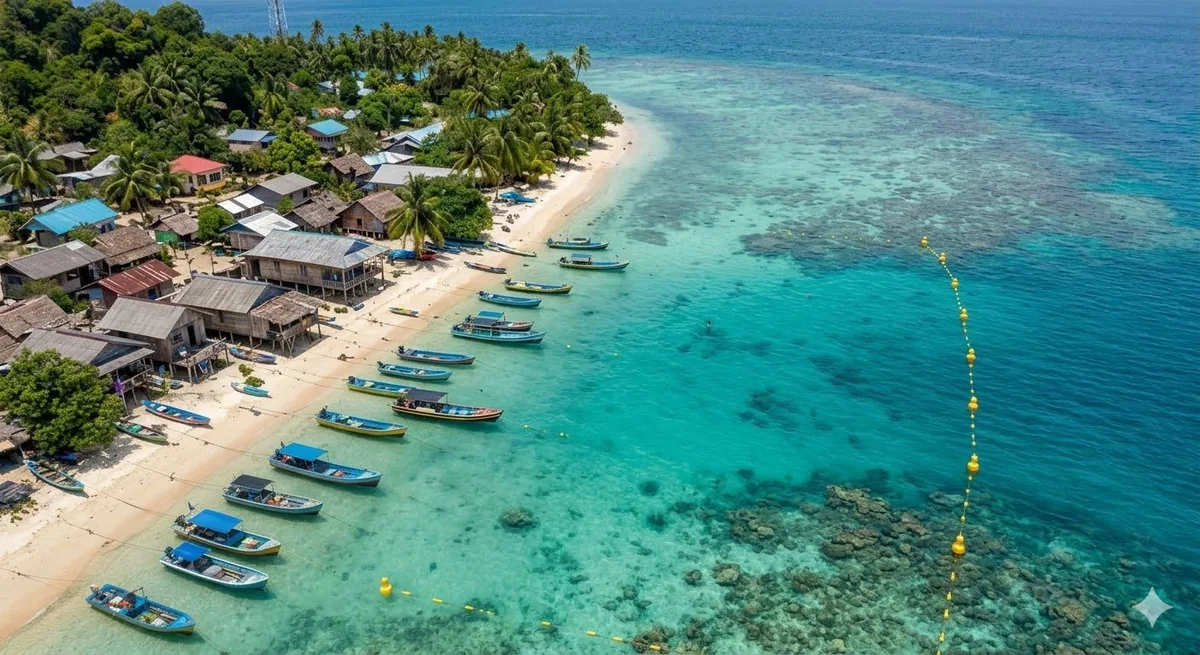
Aerial views of coastal island communities where local livelihoods and global conservation finances intersect. Credit: Gemini

Research Summary

A new 2025 study explores the rise of "Blue Finance", which are private investment tools like Blue Bonds and Debt-for-Nature Swaps used to fund sustainable ocean economies. While these financial mechanisms are channeling billions into marine conservation, the research warns that they carry hidden economic risks for developing nations. These risks include "bluewashing," the privatization of public ocean spaces, and the transfer of government decision-making power to private investors.

The Billion-Dollar "Blue Finance" Boom: Are Private Oceans the Price of Conservation?

Research Shock

Published on March 24, 2026 at 1:42 am

Summary

A new 2025 study explores the rise of "Blue Finance", which are private investment tools like Blue Bonds and Debt-for-Nature Swaps used to fund sustainable ocean economies. While these financial mechanisms are channeling billions into marine conservation, the research warns that they carry hidden economic risks for developing nations. These risks include "bluewashing," the privatization of public ocean spaces, and the transfer of government decision-making power to private investors.

The ocean is a massive industrial engine, contributing 2.5% to the global gross domestic product through sectors like offshore energy, shipping, fisheries, and the rapidly growing aquaculture industry. However, as the push for a sustainable "Blue Economy" accelerates, the traditional international aid used to fund these transitions is projected to drop.

Enter "Blue Finance", which is a relatively new wave of private and blended public-private investment stepping in to fill the gap. But according to a newly released 2025 study from Dalhousie University, the influx of private capital into ocean conservation comes with hidden strings attached, posing significant risks to the sovereignty and economies of Small Island States.

To understand the shift, it helps to look at the tools Wall Street and global investors are using to fund the ocean. The Blue Economy is a model for ocean-based economic development that aims to balance economic growth with environmental protection and social equity. To fund this, governments are turning to "Blue Bonds," which are debt instruments where the funds raised from investors are explicitly earmarked to be spent on marine conservation and sustainable ocean projects. Another major tool is the Debt-for-Nature Swap. In these agreements, a portion of a developing nation's foreign debt is purchased at discounted rates. In exchange, the nation commits to investing the saved money into local environmental conservation.
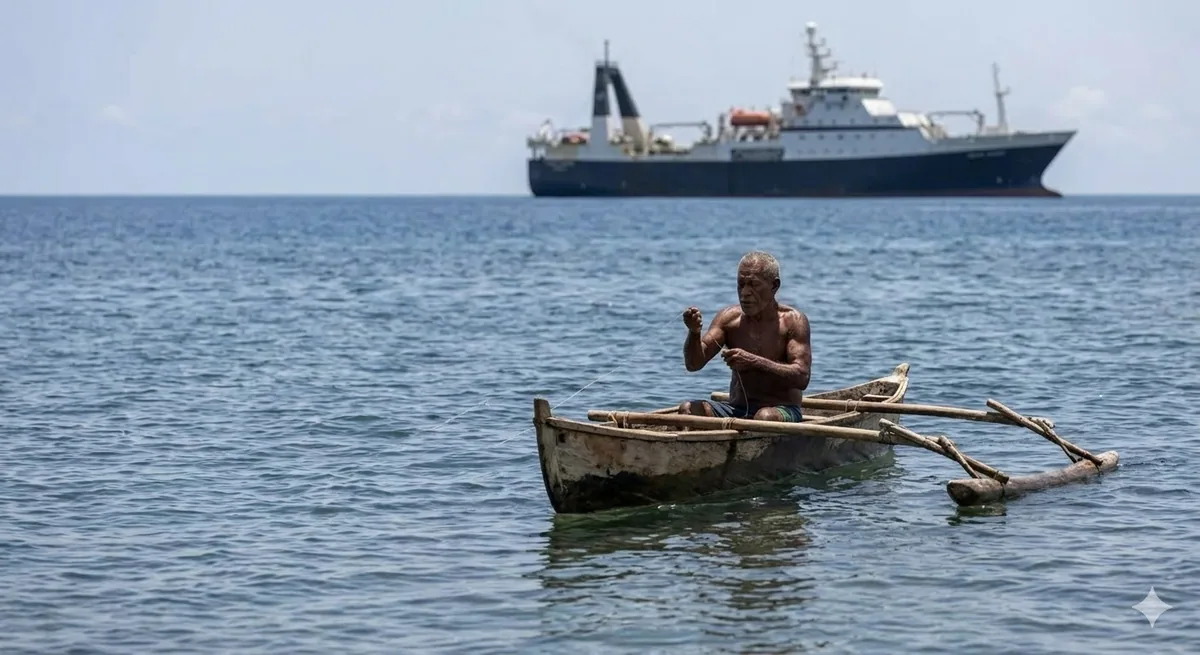
Local small-scale fishers face uncertain futures as global financial agreements reshape access to public ocean spaces. Credit: Gemini

While deals like Ecuador’s massive $1.5 billion debt-for-nature swap in 2023 make global headlines for their scale, the research highlights several alarming industrial and economic risks for the host nations. Because private investors require returns on their investments, they often demand decision-making power, sometimes securing seats on government steering committees. This hands significant influence over public ocean policy to unelected, foreign financial entities.

Furthermore, to make conservation projects investable and secure, investors often push for the creation of vast Marine Protected Areas that mimic private property rights. This privatization of public space can displace local, small-scale fishers who rely on those waters for their livelihoods. There is also a severe "bluewashing" epidemic. Similar to greenwashing, bluewashing occurs when projects make misleading claims about their ocean-related sustainability. The lack of standardization in this market is so severe that currently, a third of blue bond issuers do not report on their actual environmental impact at all.

Private investment is undoubtedly required to transition global ocean industries toward sustainability. However, the research urges caution, proposing a 15-question framework for policymakers to ensure that the drive for financial returns does not overshadow the need for socially equitable and environmentally sound ocean governance.

Category

Business + Innovation

Tags

Blue Economy, Blue Finance, Ocean Conservation, Debt-for-Nature Swaps, Sustainable Investing

Disclosure Statement

This reporting is based on the Master of Marine Management graduate project, "Financing the Development of the Blue Economy: Considerations for Blue Finance Engagement," authored by Kate Alexandra Frost and published by Dalhousie University in December 2025.

Research Paper

https://dalspace.library.dal.ca/items/e52b0e80-31d2-490b-addf-f58c24d25004

The ocean is a massive industrial engine, contributing 2.5% to the global gross domestic product through sectors like offshore energy, shipping, fisheries, and the rapidly growing aquaculture industry. However, as the push for a sustainable "Blue Economy" accelerates, the traditional international aid used to fund these transitions is projected to drop.

Enter "Blue Finance", which is a relatively new wave of private and blended public-private investment stepping in to fill the gap. But according to a newly released 2025 study from Dalhousie University, the influx of private capital into ocean conservation comes with hidden strings attached, posing significant risks to the sovereignty and economies of Small Island States.

To understand the shift, it helps to look at the tools Wall Street and global investors are using to fund the ocean. The Blue Economy is a model for ocean-based economic development that aims to balance economic growth with environmental protection and social equity. To fund this, governments are turning to "Blue Bonds," which are debt instruments where the funds raised from investors are explicitly earmarked to be spent on marine conservation and sustainable ocean projects. Another major tool is the Debt-for-Nature Swap. In these agreements, a portion of a developing nation's foreign debt is purchased at discounted rates. In exchange, the nation commits to investing the saved money into local environmental conservation.

Local small-scale fishers face uncertain futures as global financial agreements reshape access to public ocean spaces. Credit: Gemini

While deals like Ecuador’s massive $1.5 billion debt-for-nature swap in 2023 make global headlines for their scale, the research highlights several alarming industrial and economic risks for the host nations. Because private investors require returns on their investments, they often demand decision-making power, sometimes securing seats on government steering committees. This hands significant influence over public ocean policy to unelected, foreign financial entities.

Furthermore, to make conservation projects investable and secure, investors often push for the creation of vast Marine Protected Areas that mimic private property rights. This privatization of public space can displace local, small-scale fishers who rely on those waters for their livelihoods. There is also a severe "bluewashing" epidemic. Similar to greenwashing, bluewashing occurs when projects make misleading claims about their ocean-related sustainability. The lack of standardization in this market is so severe that currently, a third of blue bond issuers do not report on their actual environmental impact at all.

Private investment is undoubtedly required to transition global ocean industries toward sustainability. However, the research urges caution, proposing a 15-question framework for policymakers to ensure that the drive for financial returns does not overshadow the need for socially equitable and environmentally sound ocean governance.

Institution

Research Shock

Category

Business + Innovation

Tags

Blue EconomyBlue FinanceOcean ConservationDebt-for-Nature SwapsSustainable Investing

Disclosure statement

This reporting is based on the Master of Marine Management graduate project, "Financing the Development of the Blue Economy: Considerations for Blue Finance Engagement," authored by Kate Alexandra Frost and published by Dalhousie University in December 2025.

Research Paper

Read the full research paper

Comments (...)

Loading comments...

Institution

Research Shock

Category

Business + Innovation

Tags

Blue EconomyBlue FinanceOcean ConservationDebt-for-Nature SwapsSustainable Investing

Disclosure statement

This reporting is based on the Master of Marine Management graduate project, "Financing the Development of the Blue Economy: Considerations for Blue Finance Engagement," authored by Kate Alexandra Frost and published by Dalhousie University in December 2025.

Research Paper

Read the full research paper