
iconResearch Shock
Artificial IntelligenceEnvironmentLife SciencesSpaceNeuroscienceEngineeringSocietyTechnologyMedicineBusiness + Innovation

Company

  • Who we are
  • Our team
  • Contact us

Community

  • Community standards
  • Author guidelines

University Partners

  • For Universities
  • For Departments
  • For Research Labs

Legal

  • Privacy policy
  • Terms of service

Follow Us

Copyright © 2025, Research Shock, Inc.

The Power of Nostalgia: How "Reminiscing" is Shaping the Future of Elder Care and the Silver Economy

The Power of Nostalgia: How "Reminiscing" is Shaping the Future of Elder Care and the Silver Economy

Research Shock•Loading...
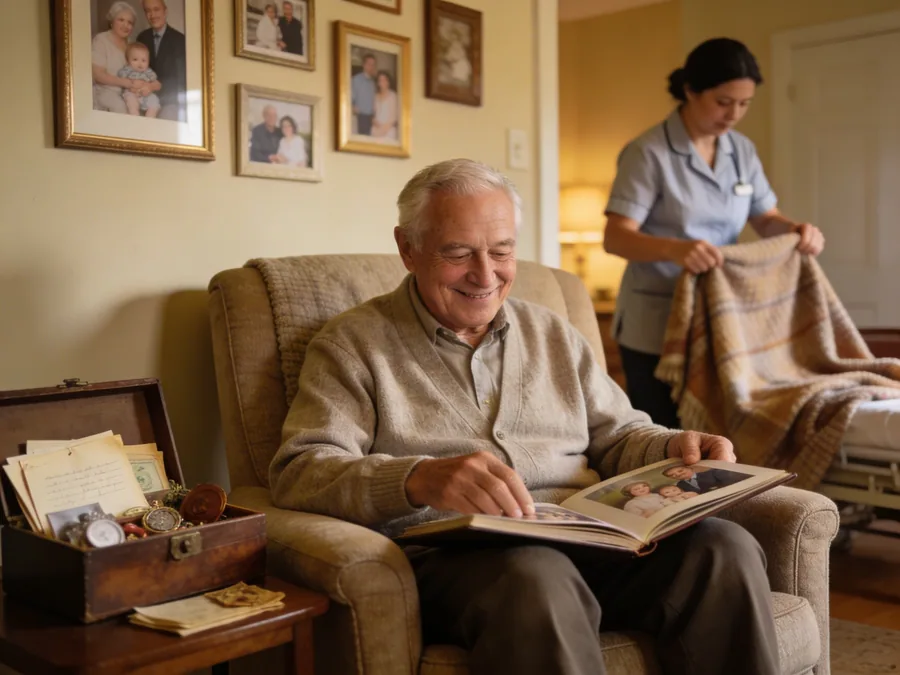
Reminiscing: a simple yet powerful memory aid for aging adults. Credit: Perplexity

Research Summary

A newly published 2025 doctoral dissertation from the University of Prince Edward Island reveals that "reminiscing" is far more than just a trip down memory lane for older adults. It is a vital, low effort cognitive strategy used to compensate for natural memory changes. Because this process remains accessible even to those with mild cognitive impairment, these findings open the door for cost effective, scalable psychological interventions in the elder care industry, offering significant economic benefits for the rapidly growing "Silver Economy."

The Power of Nostalgia: How "Reminiscing" is Shaping the Future of Elder Care and the Silver Economy

Research Shock

Published on April 3, 2026 at 9:20 pm

Summary

A newly published 2025 doctoral dissertation from the University of Prince Edward Island reveals that "reminiscing" is far more than just a trip down memory lane for older adults. It is a vital, low effort cognitive strategy used to compensate for natural memory changes. Because this process remains accessible even to those with mild cognitive impairment, these findings open the door for cost effective, scalable psychological interventions in the elder care industry, offering significant economic benefits for the rapidly growing "Silver Economy."

We all enjoy looking back on the "good old days," but new research suggests that for older adults, reminiscing is actually a sophisticated and highly efficient cognitive survival tool.

According to a 2025 doctoral dissertation by Vincent Patrick Salabarria at the University of Prince Edward Island, the act of reminiscence, using personal memories to make sense of one's life, serves as a psychological anchor that does not require heavy mental lifting. This discovery holds profound implications not only for our understanding of the aging brain but also for the economics of the global healthcare industry.

The Science of Memory: Gist vs. Detail

To understand the breakthrough, it helps to understand how memory changes as we age. Scientists generally divide our memory into two camps: episodic memory (recalling specific, detailed events, like what you ate for breakfast last Tuesday) and semantic memory (general knowledge and the "gist" of experiences).

Salabarria’s research highlights that as people age, they naturally begin to prefer semantic memory over episodic memory. Instead of burning mental energy trying to recall highly specific, recent details, older adults rely on the vast, crystallized library of life knowledge they have built over decades.

The study tested older adults ranging from those with normal cognition to those with Mild Cognitive Impairment (MCI). The fascinating result? Individuals who showed lower short-term retention of newly learned verbal information actually reported higher frequencies of reminiscing. In short: reminiscing acts as a brilliant compensatory strategy. When the brain finds it harder to hold onto new, specific details, it leans into the rich, meaningful, and easily accessible archives of the past to help solve present problems and maintain a sense of identity.

The Economic and Industrial Impact: A Boon for the Silver Economy

While the research is rooted in clinical psychology, its translation to the "Silver Economy", which is the market focused on the needs of an aging population, is massive.

Currently, the healthcare industry spends billions annually attempting to manage cognitive decline, depression, and anxiety in seniors. One of the most significant findings in Salabarria’s study is that reminiscence does not require a high level of effortful cognitive functioning. It remains highly accessible even for individuals experiencing mild cognitive impairment.

For the elder care industry, this is a game changer. It validates Reminiscence Therapy (and broader Life Review Therapy) as a highly scalable, low barrier, and cost-effective intervention.

  • Senior Living & Healthcare Facilities: Nursing homes and assisted living centers can implement structured reminiscing programs without the need for expensive medical equipment. Because the cognitive load to reminisce is low, group or individual therapy sessions can improve mood and quality of life efficiently, reducing the economic burden of treating severe geriatric depression.

  • Tech and Digital Health: There is a burgeoning market for apps and digital platforms designed for seniors. Tech companies can use this data to pivot away from frustrating "brain training" games that demand high-level episodic memory, and instead develop platforms that use photos, music, and prompts to cue semantic reminiscing, naturally boosting the user's mental wellbeing.

  • Healthcare Economics: By utilizing accessible therapies that rely on what older adults naturally do well (finding the "gist" and meaning in their past) healthcare systems can reduce the downstream costs associated with severe cognitive distress and isolation.

Looking Forward

Aging is often unfairly associated strictly with loss. However, this research reframes the aging mind not as a declining machine, but as an incredibly adaptable system that shifts its strategy to prioritize meaning over minute details.

As the global population continues to age, industries that understand and leverage the natural, low effort power of reminiscence will not only capture a massive market share but will fundamentally improve the way we care for our seniors.

Category

Neuroscience

Tags

AgingPopulation, CognitiveHealth, ReminiscenceTherapy, SilverEconomy, HealthcareInnovation, Psychology, MemoryCare

Disclosure Statement

This article is based on the 2025 academic dissertation titled "A Neurocognitive Operationalization of Reminiscence in Older Adulthood" by Vincent Patrick Salabarria, submitted to the University of Prince Edward Island. The applications to industry and economics are journalistic interpretations based strictly on the clinical and cognitive findings presented in the original text.

Research Paper

https://islandscholar.ca/islandora/object/18094

We all enjoy looking back on the "good old days," but new research suggests that for older adults, reminiscing is actually a sophisticated and highly efficient cognitive survival tool.

According to a 2025 doctoral dissertation by Vincent Patrick Salabarria at the University of Prince Edward Island, the act of reminiscence, using personal memories to make sense of one's life, serves as a psychological anchor that does not require heavy mental lifting. This discovery holds profound implications not only for our understanding of the aging brain but also for the economics of the global healthcare industry.

The Science of Memory: Gist vs. Detail

To understand the breakthrough, it helps to understand how memory changes as we age. Scientists generally divide our memory into two camps: episodic memory (recalling specific, detailed events, like what you ate for breakfast last Tuesday) and semantic memory (general knowledge and the "gist" of experiences).

Salabarria’s research highlights that as people age, they naturally begin to prefer semantic memory over episodic memory. Instead of burning mental energy trying to recall highly specific, recent details, older adults rely on the vast, crystallized library of life knowledge they have built over decades.

The study tested older adults ranging from those with normal cognition to those with Mild Cognitive Impairment (MCI). The fascinating result? Individuals who showed lower short-term retention of newly learned verbal information actually reported higher frequencies of reminiscing. In short: reminiscing acts as a brilliant compensatory strategy. When the brain finds it harder to hold onto new, specific details, it leans into the rich, meaningful, and easily accessible archives of the past to help solve present problems and maintain a sense of identity.

The Economic and Industrial Impact: A Boon for the Silver Economy

While the research is rooted in clinical psychology, its translation to the "Silver Economy", which is the market focused on the needs of an aging population, is massive.

Currently, the healthcare industry spends billions annually attempting to manage cognitive decline, depression, and anxiety in seniors. One of the most significant findings in Salabarria’s study is that reminiscence does not require a high level of effortful cognitive functioning. It remains highly accessible even for individuals experiencing mild cognitive impairment.

For the elder care industry, this is a game changer. It validates Reminiscence Therapy (and broader Life Review Therapy) as a highly scalable, low barrier, and cost-effective intervention.

  • Senior Living & Healthcare Facilities: Nursing homes and assisted living centers can implement structured reminiscing programs without the need for expensive medical equipment. Because the cognitive load to reminisce is low, group or individual therapy sessions can improve mood and quality of life efficiently, reducing the economic burden of treating severe geriatric depression.

  • Tech and Digital Health: There is a burgeoning market for apps and digital platforms designed for seniors. Tech companies can use this data to pivot away from frustrating "brain training" games that demand high-level episodic memory, and instead develop platforms that use photos, music, and prompts to cue semantic reminiscing, naturally boosting the user's mental wellbeing.

  • Healthcare Economics: By utilizing accessible therapies that rely on what older adults naturally do well (finding the "gist" and meaning in their past) healthcare systems can reduce the downstream costs associated with severe cognitive distress and isolation.

Looking Forward

Aging is often unfairly associated strictly with loss. However, this research reframes the aging mind not as a declining machine, but as an incredibly adaptable system that shifts its strategy to prioritize meaning over minute details.

As the global population continues to age, industries that understand and leverage the natural, low effort power of reminiscence will not only capture a massive market share but will fundamentally improve the way we care for our seniors.

Institution

Research Shock

Category

Neuroscience

Tags

AgingPopulationCognitiveHealthReminiscenceTherapySilverEconomyHealthcareInnovationPsychologyMemoryCare

Disclosure statement

This article is based on the 2025 academic dissertation titled "A Neurocognitive Operationalization of Reminiscence in Older Adulthood" by Vincent Patrick Salabarria, submitted to the University of Prince Edward Island. The applications to industry and economics are journalistic interpretations based strictly on the clinical and cognitive findings presented in the original text.

Research Paper

Read the full research paper

Comments (...)

Loading comments...

Institution

Research Shock

Category

Neuroscience

Tags

AgingPopulationCognitiveHealthReminiscenceTherapySilverEconomyHealthcareInnovationPsychologyMemoryCare

Disclosure statement

This article is based on the 2025 academic dissertation titled "A Neurocognitive Operationalization of Reminiscence in Older Adulthood" by Vincent Patrick Salabarria, submitted to the University of Prince Edward Island. The applications to industry and economics are journalistic interpretations based strictly on the clinical and cognitive findings presented in the original text.

Research Paper

Read the full research paper